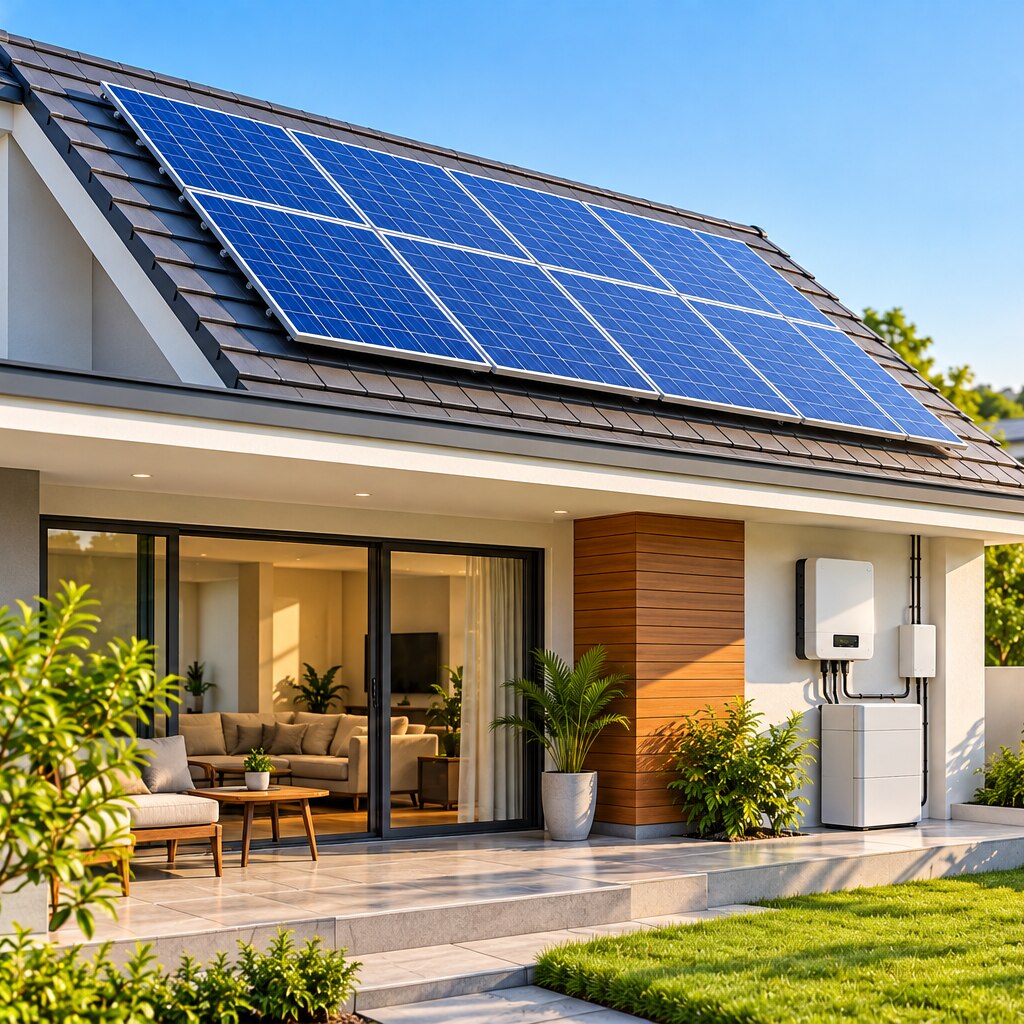
The right residential solar system starts with your roof, electricity bills and backup requirements—not with a panel brand or advertised capacity. By the end, you will be able to estimate a sensible system size, understand Maharashtra’s grid-connection process and compare equipment without mistaking peak ratings for household output.
Key takeaways
- Check usable roof area, orientation, shade and structural condition before requesting quotes.
- Size solar capacity from annual electricity use, not roof area alone.
- Choose on-grid, off-grid or hybrid based on outages and backup needs.
- Compare panel, inverter, warranty, installation and utility-approval details line by line.
Does Your Roof Have Enough Space and Strength for Solar Panels?
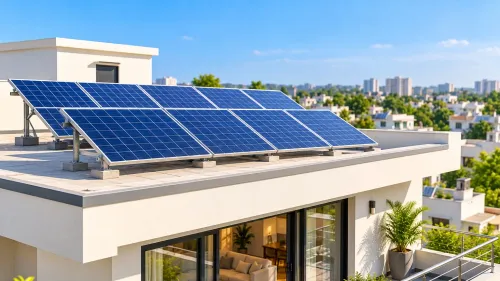
Determine roof suitability by checking four constraints before you request a quote: usable roof area, roof orientation, shade and structural condition. A large roof is not automatically suitable if vents, tanks or nearby buildings occupy the sunniest sections.
1. Measure the unobstructed roof sections and sketch their length and width. Remove space needed for parapets, access paths, skylights, water tanks and equipment. This gives your usable roof area, not the total roof footprint.
2. Record roof orientation with a compass or phone app. Its azimuth shows the direction the roof faces. South-facing surfaces usually produce strong annual output in India, while east- and west-facing sections can work well when you value morning or afternoon generation.
3. Check shade at different times between 9 a.m. and 4 p.m. Mark shadows from trees, adjoining buildings, parapets and overhead wires. A small shadow across one module can reduce output from a whole electrical string.
4. Compare the roof slope with the recommended tilt angle for solar panels in India, then note whether mounting frames would be needed. A low-slope roof is not disqualified, but frames add wind load, height and installation work.
5. Inspect for leaks, cracks, rust, sagging and loose sheets. Confirm the remaining roof life before installation; replacing an old roof later can require removing and reinstalling every panel. Ask for structural checks, flashing details and wind-load compliance.
Tell the installer whether you want photovoltaic panels or solar-thermal water-heating collectors. They use different equipment, space and mounting arrangements. Give the installer your measurements, shade photos and roof age so the quote reflects the real site.
How Much Solar Capacity Does Your Home Actually Need?
Start with your 12-month electricity bill kWh total, then match that demand to usable roof area and a site-specific generation estimate. Do not size the array from one high bill or from panel wattage alone.
- Add monthly kWh from at least 12 bills to capture seasonal electricity consumption.
- Mark your highest-use months, especially when air-conditioning, water heating or pumps run.
- Decide how much of that demand you want solar to cover; a grid-connected home does not need to produce every kilowatt-hour onsite.
- Have the estimate model roof direction, tilt, shade, temperature, inverter efficiency, wiring, soiling and mismatch losses.
- Divide your target annual electricity production by the modeled annual generation from 1 kW of solar to obtain the solar system capacity.
- Convert capacity into panels: ten 450-watt modules equal 4.5 kW of rated capacity.
- Check that this panel count fits the roof sections that receive useful sunlight, not merely the roof’s total area.
A module’s STC rating uses 1,000 W/m² irradiance, a 25°C cell temperature and air mass 1.5. Hot rooftop cells reduce output; a common crystalline-silicon temperature coefficient is about −0.3% to −0.5% per °C above 25°C. Use PVWatts or a detailed installer simulation instead of multiplying capacity by “sun hours.”
For an off-grid system, average use is only the starting point. Add battery usable capacity, several days of autonomy, inverter surge power, charging limits and high-load appliances. Finally, compare expected generation with your utility’s export credit and fixed charges; production alone does not equal bill savings.
Should You Choose On-Grid, Off-Grid or Hybrid Solar?
Choose on-grid solar if the grid is dependable and your priority is reducing bills rather than powering the house during outages. Choose off-grid solar only when you accept higher equipment costs, disciplined load management and battery dependence.
| Option | What it means | Best match |
|---|---|---|
| On-grid solar | Panels feed household loads and export surplus; the inverter normally shuts down during a grid outage. | Reliable grid, lowest battery budget, no outage backup |
| Off-grid solar | Panels, batteries and an off-grid inverter supply the home without utility support. | Remote or unreliable grid, willingness to limit loads and manage energy |
| Hybrid solar | Solar and batteries work with the grid, using backup equipment during an outage. | Frequent outages, backup expectations and a budget for batteries |
An on-grid system does not keep lights on merely because sunlight is available. Safe backup requires listed battery-inverter equipment, a transfer or backup configuration and a defined set of circuits.
For off-grid solar, average daily kWh is only the starting point. Design for seasonal sunlight, several days of autonomy or another generator, inverter surge power, charging limits and solar battery usable capacity. Electric water heaters, induction cookers, pumps and air-conditioners can make the array and battery much larger.
Do not size a battery from its nameplate alone. Usable capacity falls after reserve settings, inverter losses, temperature and ageing, while the inverter must handle appliances’ continuous and starting power. A critical-loads panel covering refrigeration, lighting, communications and selected outlets costs less than backing up every circuit.
How Do Net Metering and Utility Approval Work in Maharashtra?
Surplus electricity flows through the grid, and Maharashtra net metering records it against electricity drawn from the grid. Your bill credit depends on the applicable tariff and billing rules, not simply on how many kilowatt-hours your panels generate.
A bidirectional meter measures imports when your home uses more power than the system produces and exports when production exceeds household demand. At the end of the billing cycle, the utility applies eligible exported units under its approved credit mechanism; fixed charges, demand charges and other fees can remain payable.
Check the current tariff order and export limit before using projected savings.
Your application for utility approval for rooftop solar is separate from buying and installing equipment. The usual sequence is:
- Submit the online application with your sanctioned load, system capacity, site details and equipment information.
- Wait for the distribution utility’s technical review and interconnection approval.
- Install the system using equipment and protection settings accepted by the utility.
- Request inspection, documentation verification and replacement of the existing meter with a bidirectional meter.
- Begin operation only after the utility issues permission to energise or its equivalent approval.
Do not switch on a grid-connected inverter after installation alone. During a power cut, the inverter normally shuts down to protect repair crews; batteries and a correctly configured backup circuit are required for outage power. Ask the installer to show the approved export limit and explain how exceeding it is prevented.
How Should You Compare Panels, Inverters and Installation Proposals?
Compare predicted annual generation, not panel wattage alone. A monocrystalline solar panel’s advertised output uses STC: 1,000 W/m² irradiance, 25°C cell temperature and air mass 1.5. Ask for module efficiency and the temperature coefficient; a coefficient near −0.3% to −0.5% per °C above 25°C exposes hot-weather losses.
The estimate must also include shading, soiling, wiring and inverter losses.
- Check the panel degradation rate warranty for year-one loss and the annual rate thereafter; a 0.5% annual decline is a useful reference, not a guarantee. Separate it from the product warranty and the installer’s workmanship warranty.
- Check the inverter’s continuous output, MPPT voltage range, maximum input current, efficiency, monitoring method and warranty. Oversizing the DC array is acceptable only within its stated limits.
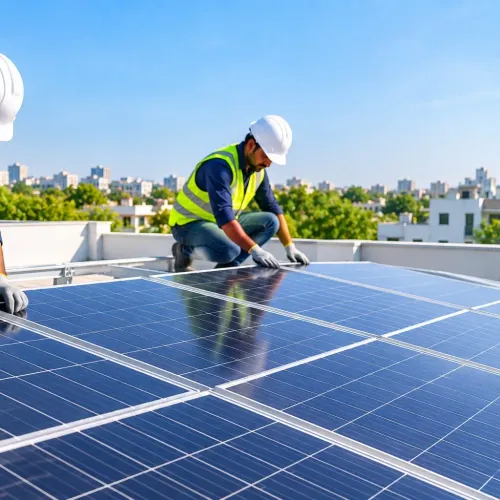
- Require a roof plan showing attachment points, flashing, cable routes, earthing, surge protection and access for maintenance. Confirm who repairs leaks and removes the array if the roof needs replacement.
- Whether you use Orange Sun Power Solutions or another installer, get application, inspection, bidirectional-meter work and permission-to-operate responsibilities written into the proposal.
| Item | Strong evidence | Warning sign |
|---|---|---|
| Panels | Datasheet, efficiency, temperature coefficient, degradation warranty | Wattage without conditions |
| Inverter | Model number, MPPT limits, output rating and warranty | “Compatible inverter” only |
| Installation | Structural attachments, waterproofing method and approval timeline | Lump sum with no scope |
Related products
 | Residential Solar Rooftop We also have the largest private solar bungalow installation and are the most advanced in constructing and maintaining Bungalow aesthetics. View product → |
 | Solar Panels We have wide range of solar panel. Solar Tie Grid System, Solar Street Light System, Solar Off Grid System, Solar Water Heater, Solar Pump. View product → |
Frequently asked questions
How do I know whether my roof is suitable for solar panels?
Check four constraints: usable roof area, orientation, shade and structural condition. Account for vents, water tanks, access paths and nearby buildings before measuring available space.
How much solar capacity does a home need?
Use your electricity bills to estimate annual consumption, then match the required generation to your roof space, local sunlight and the system's expected performance. Do not size the system from roof area alone.
Should I choose on-grid, off-grid or hybrid solar?
Choose on-grid when reducing electricity bills is the priority and the grid is reliable. Choose off-grid when you need independent operation with batteries. Choose hybrid when you want grid-connected savings plus battery backup.
How does net metering work in Maharashtra?
Your installer must submit the required application and system details to the local electricity distribution utility, obtain approval, pass inspection and arrange meter installation before exported solar electricity can receive credit. Confirm the current process with your distribution company.
What should I compare in residential solar installation quotes?
Compare the panel model and warranty, inverter type and warranty, mounting structure, protection devices, cable specifications, generation estimate, workmanship coverage, commissioning work and responsibility for utility approval.