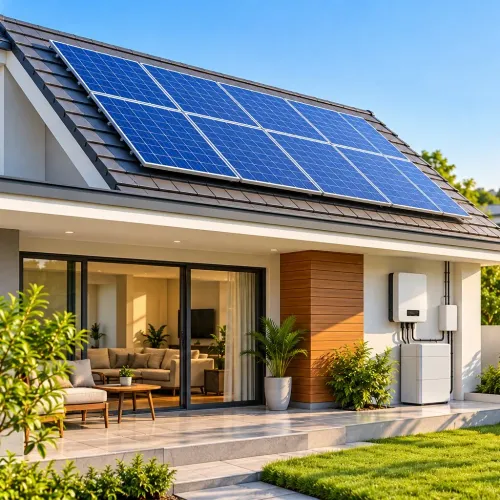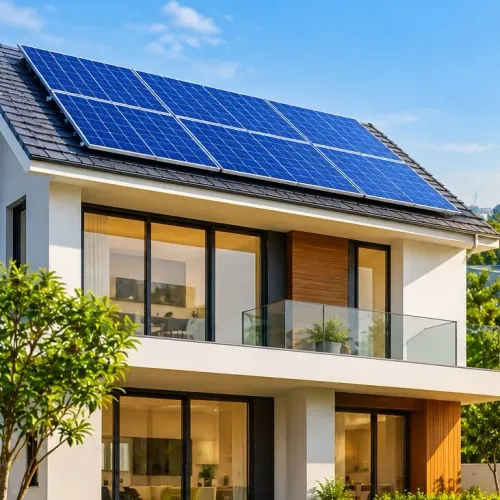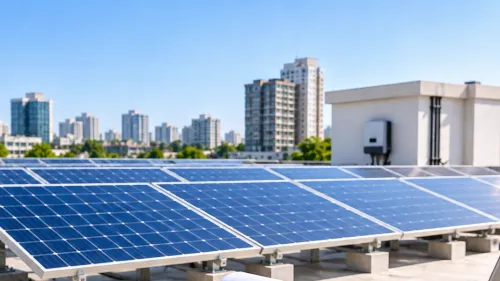

The best solar company is not the one with the lowest price or the highest panel wattage; it is the one that makes its design assumptions, installation responsibilities, approvals, warranties and future support verifiable. By the end, you will have a practical way to compare bids, test generation claims and identify gaps before signing a contract.
Key takeaways
- Ask for recent comparable projects and speak with at least two customers.
- Require a complete roof survey, shading assessment and system design.
- Compare quotations by panels, inverter, generation, backup and warranty terms.
- Confirm approvals, installation responsibility and every promise in writing.
Start with the installer’s evidence, not the sales pitch
A completed rooftop project is stronger evidence than a polished sales presentation. Ask for recent comparable projects on the same roof type—flat, tiled, metal or concrete—and speak directly with at least two customers about delays, leaks, commissioning and after-sales response.
Use this solar installer checklist before treating any quotation as credible:
- Recent comparable projects, with completion photographs and customer references
- The legal name of the installer, business registration or tax document, and license or registration number where required
- Proof of insurance, including public-liability and worker-accident coverage
- Panel and inverter datasheets, written generation estimates and full warranty terms
- The name of the company performing the work: its employees, a subcontractor or another subcontractor
- A sample contract covering permits, inspections, roof repairs, flashing, waterproofing and later panel removal
The installer should explain who carries responsibility when workmanship causes a leak or a failed inspection. If the salesperson, contracting company and installation crew have different names, identify the party responsible for scheduling, defects, warranty claims and customer communication.
Inspect the roof evidence too. A competent company records roof age and condition before proposing panels; installing on a roof near replacement can force expensive removal and reinstallation. Ask the company to state exclusions, change-order prices, milestone payments, cancellation rights, lien waivers and what happens if approval, interconnection or promised generation fails.
A solar company comparison based only on price or monthly payment hides these risks.
Check whether the roof survey and system design are complete
A credible capacity recommendation starts with a measured roof survey and a written load calculation, not only your electricity bill. Request the drawings, assumptions and exclusions before accepting the proposed system size.
1. Inspect the roof’s age, condition, structure, waterproofing, flashing, drainage and access. Record nearby trees, buildings and planned construction that could create future shade. If reroofing or repairs are due, clarify whether they include panel removal, reinstallation and new flashing; installing first can turn a roof job into two expensive projects.
2. Map the usable shadow-free area and mark obstructions such as tanks, vents and parapets. The design should state roof orientation and tilt, panel layout, mounting method and safe maintenance access. A panel count based on the entire roof will overstate the capacity that can actually be installed.
3. Model expected generation using shading, azimuth, tilt, temperature, soiling, inverter and cable losses, plus degradation. Reject an estimate that multiplies panel nameplate capacity by 8,760 hours; that calculation treats every hour as full sun.
4. For an off-grid or backup system, inventory each appliance and its running and starting power. Pumps, compressors and well equipment can trip an inverter even when monthly energy use appears low. Check the calculation in both kW for instantaneous power and kWh for stored or daily energy.
5. Compare the design with your sanctioned load and utility limits, then ask which loads remain powered during an outage. The proposal should identify inverter power, battery usable capacity, reserve and backup duration rather than quoting battery nameplate capacity alone.
Make competing quotations genuinely comparable
A solar quotation comparison is valid only when both bids describe the same system size, expected output, equipment and installation scope. Ask each company to complete one comparison sheet rather than comparing the headline price or price per watt.
| Item | Quote A | Quote B | Difference to resolve |
|---|---|---|---|
| System size and layout | kWdc, roof planes and panel count | kWdc, roof planes and panel count | Capacity or roof placement |
| Panel model and wattage | Exact model, wattage and datasheet | Exact model, wattage and datasheet | Brand, rating or technology |
| Inverter make and model | Model, rating and architecture | Model, rating and architecture | String, hybrid or microinverter design |
| Mounting structure and protection devices | Rails, anchors, earthing, isolators and surge protection | Rails, anchors, earthing, isolators and surge protection | Missing safety equipment |
| Installation scope | Labour, conduit, cabling, roof penetrations and waterproofing | Labour, conduit, cabling, roof penetrations and waterproofing | Excluded work |
| Monitoring and handover | App, meter, testing and documents | App, meter, testing and documents | Different after-installation service |
| Price and obligations | Taxes, approvals, utility fees and payment schedule | Taxes, approvals, utility fees and payment schedule | Extra charges |
Require both companies to state roof repairs, reroofing, flashing and future panel removal separately. A low quote that excludes these items is not cheaper if the roof needs work.
Compare the annual kWh estimate, not just the claimed savings. Check the software or method, shading, tilt, azimuth, temperature, soiling, inverter losses and degradation assumptions.
Finally, ask which electricity tariff values exported power, because net metering, net billing and export credits create different payback results. Ensure warranties identify who handles defective equipment, labour and transport.
Test generation, backup and warranty promises
Reject any proposal that gives an annual savings figure without an annual kWh estimate. Ask for the system’s kWdc size, module and inverter models, roof-plane layout, and the software used.
Recalculate the result in PVWatts and inspect its assumptions for shading, azimuth, tilt, temperature, soiling, inverter losses and degradation; multiplying panel capacity by 8,760 hours is not a forecast.
Compare production estimates on the same basis. A higher number can reflect optimistic shade or loss settings rather than better equipment.
Battery storage is not automatically required for a grid-connected system. If backup matters, require the quote to state the battery usable capacity, output power, round-trip efficiency, operating reserve and the exact loads it will run during an outage. “Five-hour backup” is meaningless without those loads and their wattage.
Ask whether the proposed system is on-grid, off-grid or hybrid. An off-grid or hybrid design needs a load inventory that separates kWh from kW: a pump, compressor or well motor can draw a starting surge that exceeds its running power and trip an undersized inverter.
Request these warranty terms in writing:
- Module product and performance coverage, including degradation limits
- Inverter and battery warranty periods, exclusions and claim process
- Workmanship and roof-penetration coverage
- Responsibility for labour, shipping, diagnostics, removal and reinstallation
Name one after-sales contact in the contract, along with response times, monitoring access and who handles warranty claims after installation. A warranty is weak protection if you must identify the failure, pay for access and negotiate with the manufacturer yourself.
Confirm approvals, installation responsibility and the contract
Before signing, identify who will complete each Maharashtra rooftop solar approval step and what happens if it fails. The contract should name the legal installer, registration details, insurance, subcontractors, and the distribution company application owner.
For a grid-connected project, require written responsibility for:
- Application submission, technical approval, net metering paperwork, inspection and meter change
- Required inverter and protection-device approvals accepted by the relevant distribution company
- Roof repairs, waterproofing, flashing, later panel removal and reinstallation
- Permission delays, rejection, equipment substitutions, change-order prices and cancellation
- Milestone payments, completion documents, lien waivers and the date your payment obligation begins
| Contract point | Weak wording | Clear wording |
|---|---|---|
| Exported electricity | “Savings from net metering” | State the tariff, export-credit method and calculation used for the generation estimate |
| Installation responsibility | “Installation included” | Name the installing entity, subcontractors, scope, inspection duty and workmanship warranty |
| Performance and delay | “System will generate as designed” | State the estimate basis, delay remedy and procedure if approval is denied or output falls short |
Do not accept a salesperson’s promise that “the utility will handle it.” Ask for copies of submitted applications, approval records and the final inspection or meter-change confirmation. Orange Sun Power Solutions should be judged by the same evidence: the named party responsible for paperwork, site work and warranty claims—not simply the brand on the quotation.
Related products
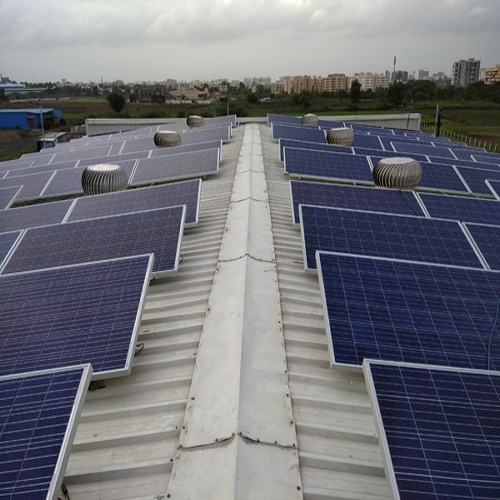 | Commercial Solar Rooftop A commercial solar system involves the installation of solar panels on a commercial or business property to generate electricity. View product → |
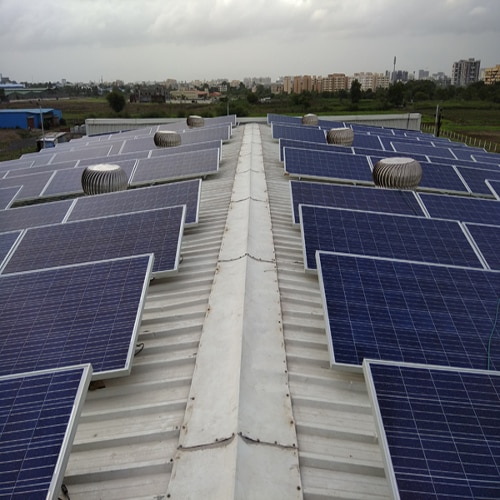 | Industrial Solar Rooftop An industrial solar rooftop project involves the installation of solar panels on the rooftops of industrial buildings or facilities to generate... View product → |
Frequently asked questions
What evidence should you request from a solar installer?
Request recent comparable rooftop projects on the same roof type and speak with at least two customers about delays, leaks, commissioning and after-sales response.
What should a complete rooftop solar survey include?
Check that the survey addresses roof type and condition, usable area, shading, structural suitability, electrical requirements and the proposed system design.
How can you compare competing solar quotations fairly?
Compare the quoted panels, inverter, mounting structure, system capacity, expected generation, backup equipment, warranty terms, installation scope and exclusions.
How do you test a solar company’s generation and warranty promises?
Ask how generation was calculated, what assumptions affect the estimate, what backup equipment does and who handles warranty claims and service.
What should your rooftop solar contract confirm?
Confirm approvals, permits, installation responsibility, equipment specifications, commissioning, payment stages, timelines, warranty coverage and after-sales obligations.
Related products
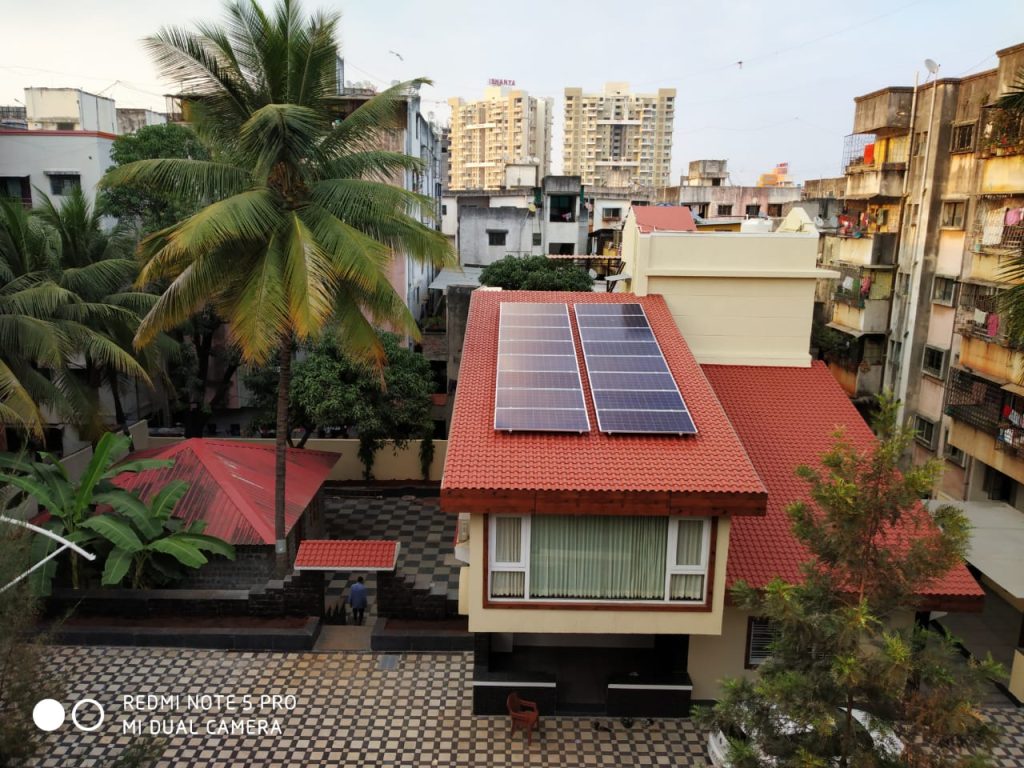 | Residential Solar Rooftop We also have the largest private solar bungalow installation and are the most advanced in constructing and maintaining Bungalow aesthetics. View product → |
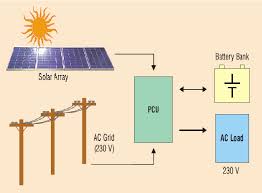 | System Intergration - On Grid We develop and commission on-grid MW scale solar power projects on turnkey basis. View product → |