A workable solar plan starts with your electricity data, not the number of panels that fit on a roof. By the end, you will be able to estimate the system size, test the site, choose between grid-connected and battery-backed operation, and compare proposals on output, resilience, approvals and long-term cost.
Key takeaways
- Use 12 months of bills and a complete load inventory before sizing.
- Match system type to bill savings, outage backup or energy independence.
- Check roof strength, shade, orientation and usable area before counting panels.
- Confirm approvals, equipment specifications, warranties and commissioning records in writing.
Start with Bills, Loads and the Result You Want
You need 12 months of electricity bills, time-based usage data, a load inventory, site constraints and a clear result before sizing solar. Decide whether the priority is bill reduction, outage backup or energy independence; each goal produces a different design.
1. Record monthly kWh, tariff structure, fixed charges, sanctioned load and export limits. Ask a business utility for 15-minute or hourly data; a home can use smart-meter records or appliance schedules.
2. List every appliance, motor and process, including its rated watts, operating hours, starting surge and future additions. Connected load is the total of nameplate ratings; actual energy consumption is what you use over time. Mark critical loads such as pumps, refrigerators, servers and medical equipment.
3. For a battery system, specify both usable kWh and output kW. Kilowatt-hours determine runtime; kilowatts determine whether the inverter and battery can start a compressor, pump or cooking appliance. Reserve limits and conversion losses reduce usable capacity below the nameplate figure.
4. If you want off-grid operation, identify the lowest-solar season, cloudy-day sequence, generator option and acceptable load shedding. Annual average consumption alone can leave you without power during monsoon or winter.
5. For solar planning, require output estimates that show shading, temperature, wiring, soiling, mismatch and inverter-loss assumptions—not just panel capacity.
Turn Electricity Use into a Solar-System Size
Use this planning formula: panel capacity (kW DC) = monthly kWh ÷ (30 × local peak-sun-hours per day × 0.75–0.85). The factor allows for heat, dust, wiring, inverter conversion and other system losses. Example: 900 monthly kWh, five peak-sun-hours and an 0.80 factor require about 7.5 kW of panels.
That result is only an energy estimate. Compare it with your daytime load, seasonal bills, roof space, expected load growth and the utility’s export limit. A home seeking bill reduction can use a different size from one seeking energy independence.
Size the inverter for simultaneous AC demand, not total connected load. Connected load is the rating of every appliance; sanctioned load is the utility-approved limit; peak demand is the highest measured use during the tariff interval.
A business may need batteries or load controls to reduce peak demand even when its annual energy production looks adequate.
Check these figures before accepting a proposal:
- Use hourly data to identify daytime load and the highest simultaneous demand.
- For on-grid systems, compare panel capacity with inverter capacity and confirm export limits.
- For off-grid systems, size for the lowest-solar season and cloudy-day sequence, then add usable battery capacity, generator support and load-shedding rules.
- Include future appliances, electric vehicles, pumps and water heating; replacing resistance water heating with a heat pump can reduce that load substantially.
Check the Roof Before Counting Panels
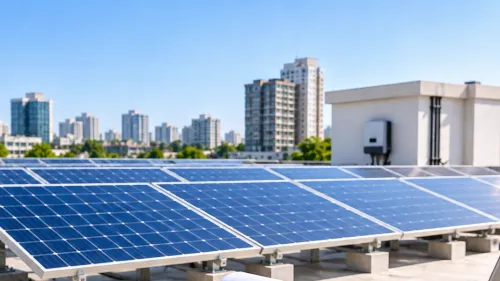
A roof can produce the expected solar energy only after you check its usable roof area, roof orientation, tilt, shading and physical condition against a site-specific estimate. Do not count every square metre: water tanks, parapets, skylights, access paths, fire clearances and maintenance gaps reduce the space available for modules.
1. Draw the roof plan and mark obstructions, panel setbacks, walkways and areas that installers cannot safely reach. The remaining usable roof area determines how many modules can physically fit.
2. Record the roof orientation and tilt. In India, a south-facing array often gives strong annual production, but east-facing modules favour morning generation and west-facing modules favour afternoon generation. Both can work when your electricity use matches those periods.
3. Check shading throughout the day and across seasons. Trees, nearby buildings, parapets and overhead tanks can shade only one section or reduce the output of an entire string, depending on the electrical design.
4. Inspect the structure, waterproofing, drainage and roof age. A roof nearing replacement can turn a simple installation into removal and reinstallation work.
5. Ask for an hourly or monthly production model using local sunlight data, the measured roof angle, shade analysis, module layout and system losses. Compare its expected kWh with your target, then revise the panel count or roof area rather than assuming every panel produces its nameplate rating.
Choose On-Grid, Off-Grid or Hybrid Operation
A grid failure changes the choice: on-grid solar normally shuts down during an outage, so panels alone cannot keep lights running. Choose the mode from the backup result you need, not from annual bill savings.
| Option | Outage behaviour | Best fit | Main planning issue |
|---|---|---|---|
| On-grid solar | Shuts down when utility power fails because of anti-islanding protection | Lower bills with no backup requirement | Export limits and daytime generation |
| Off-grid solar | Operates without the utility network | Remote sites and full energy independence | Storage and generation during cloudy periods |
| Hybrid solar | Supplies loads from solar, the grid or batteries | Bill reduction plus selected outage backup | Correct inverter, transfer equipment and battery sizing |
Off-grid solar must be sized for the lowest-sun season or several cloudy days, not the annual average. Balance array capacity, usable battery capacity, generator backup and acceptable load shedding; an undersized system can fail precisely when demand or darkness is highest.
Specify battery capacity in both kilowatt-hours and kilowatts. Kilowatt-hours indicate runtime, while kilowatts determine whether the system can start pumps, compressors or cooking appliances. Nameplate storage is not fully usable after reserve limits and conversion losses.
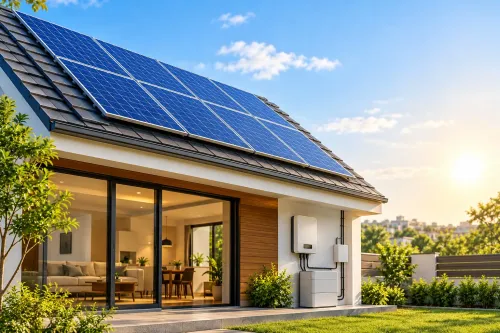
For hybrid solar, place refrigerators, communications, lighting or other critical circuits on a protected load panel. Require automatic transfer equipment and anti-backfeed protection so backup power cannot energize utility lines.
Plan for Business Demand, Expansion and Critical Loads
Annual kWh does not show when a business uses electricity, which loads create the highest demand, or what must keep running during an outage. Commercial solar planning must match the tariff, operating schedule and future business needs—not just the yearly total.
Evaluate these conditions:
- Demand charges and the utility’s demand-measurement interval. Solar output outside that interval will not reduce the billed peak; batteries or load controls may be needed.
- Expansion plans, new machinery, longer operating hours and seasonal production. Leave room for extra panels, inverter capacity and switchgear before construction fixes the system size.
- Critical loads such as servers, refrigeration, security systems, pumps and medical equipment. Define their starting power, running power and required backup hours.
- Power quality requirements. Motors, sensitive electronics and variable-frequency drives may need voltage regulation, surge protection, filtering or a compatible inverter.
Specify backup batteries in both usable kilowatt-hours and kilowatts. Kilowatt-hours determine runtime; kilowatts determine whether the system can start compressors, pumps or cooking equipment. Check reserve limits and conversion losses, not just the nameplate capacity.
For off-grid operation, test the design against the lowest-solar season and consecutive cloudy days. Compare array size, usable storage, generator support and planned load shedding before accepting an annual-average calculation.
Verify Approvals, Proposals and Commissioning Details
Reject any proposal that shows only panel capacity and annual kWh. In a solar proposal comparison, match the same roof layout, shading, electricity tariff, loss assumptions and hourly or monthly production model.
| Item | Proposal must state | Warning sign |
|---|---|---|
| System size | Panel kW, inverter kW, expected monthly output and losses | Nameplate capacity presented as actual generation |
| Approvals | Permit, electrical inspection, utility interconnection and export-compensation process | “Approval included” without named documents or responsibility |
| Backup | Battery capacity, backed-up circuits, transfer equipment and outage duration | Panels described as outage power without storage |
| Price | Equipment, structural work, taxes, monitoring, maintenance and redesign costs | Exclusions appear only after signing |
Confirm the service-panel rating, transformer capacity, utility hosting capacity and fire-access clearances before installation. Ask who pays if the utility requires a redesign or reinforcement.
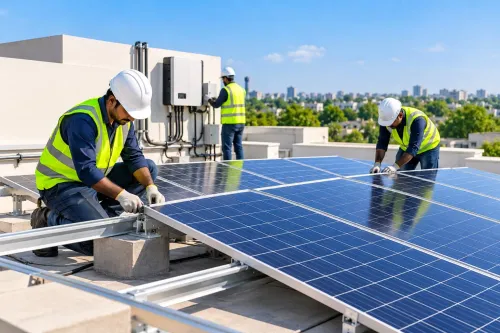
Before system commissioning, collect the approved drawings, inspection sign-off, interconnection permission, inverter settings, test results, warranty documents and monitoring login. Orange Sun Power Solutions can be asked to identify each approval owner and handover document in the contract. A grid-tied inverter must shut down during an outage unless approved backup equipment prevents unsafe line energisation.
Related products
 | Commercial Solar Rooftop A commercial solar system involves the installation of solar panels on a commercial or business property to generate electricity. View product → |
 | System Intergration - On Grid We develop and commission on-grid MW scale solar power projects on turnkey basis. View product → |
Frequently asked questions
What information do you need before sizing a solar system?
Collect 12 months of electricity bills, time-based usage data, a load inventory, site constraints and your primary goal: bill reduction, outage backup or energy independence.
How do you convert electricity use into a solar-system size?
Use your electricity consumption, local sunlight conditions, system losses, roof limitations and the result you want to estimate the required capacity and panel count.
What should you check on a roof before installing solar panels?
Check usable area, orientation, shading, structural strength, roof condition, access, drainage and the location of inverters, cables and other equipment.
How do on-grid, off-grid and hybrid solar systems differ?
On-grid systems prioritise grid-connected bill reduction, off-grid systems require batteries and sufficient generation for independent operation, and hybrid systems combine grid power, solar and battery backup.
What should businesses consider when planning solar power?
Review demand peaks, operating hours, critical loads, planned expansion, available roof or ground space, backup requirements and the effect of solar on operations.
Related products
 | Industrial Solar Rooftop An industrial solar rooftop project involves the installation of solar panels on the rooftops of industrial buildings or facilities to generate... View product → |
 | Residential Solar Rooftop We also have the largest private solar bungalow installation and are the most advanced in constructing and maintaining Bungalow aesthetics. View product → |
 | Solar Panels We have wide range of solar panel. Solar Tie Grid System, Solar Street Light System, Solar Off Grid System, Solar Water Heater, Solar Pump. View product → |
 | Residential Solar Water Heater Residential Solar Water Heater A residential solar water heater is specifically designed for use in homes to provide hot water for domestic purposes. View product → |