Solar panels reduce grid purchases only when their output matches your electricity use or when surplus power can be exported or stored. To estimate your realistic reduction, you need to compare daytime and nighttime loads, bill charges, roof conditions, outage requirements and battery limits—not just choose a panel capacity.
Key takeaways
- Use solar power during daylight; import grid electricity at night without batteries.
- Compare annual solar generation with your actual consumption, not your panel capacity alone.
- Grid connection charges and fixed fees usually remain after solar installation.
- Batteries extend backup power but need sizing around essential loads and outage duration.
What happens to solar power during a normal day and a grid outage?
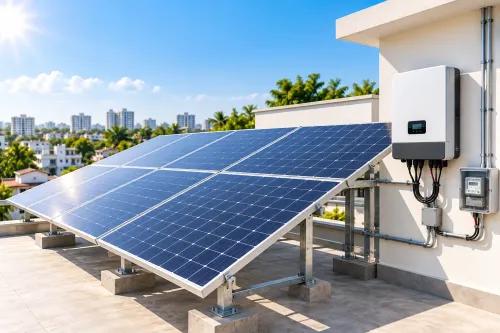
Panels generate electricity only in sunlight. During daylight, household appliances use that solar power first. Surplus power either passes through a grid-connected inverter for export to the utility grid or charges batteries; at night and during weak sunlight, the building imports electricity or draws stored energy.
This is the basic solar power flow, not automatic independence.
| Option | Normal-day operation | Grid-outage result |
|---|---|---|
| On-grid solar without batteries | Supplies daytime loads; exports surplus; imports power when output falls short | A standard inverter shuts down through anti-islanding protection, so appliances lose solar supply |
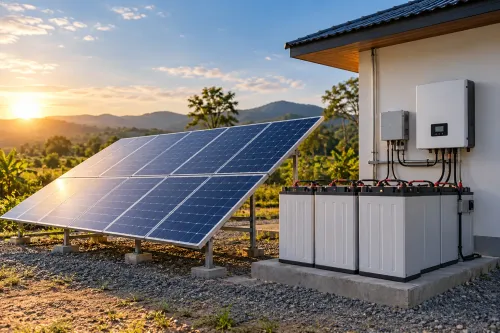
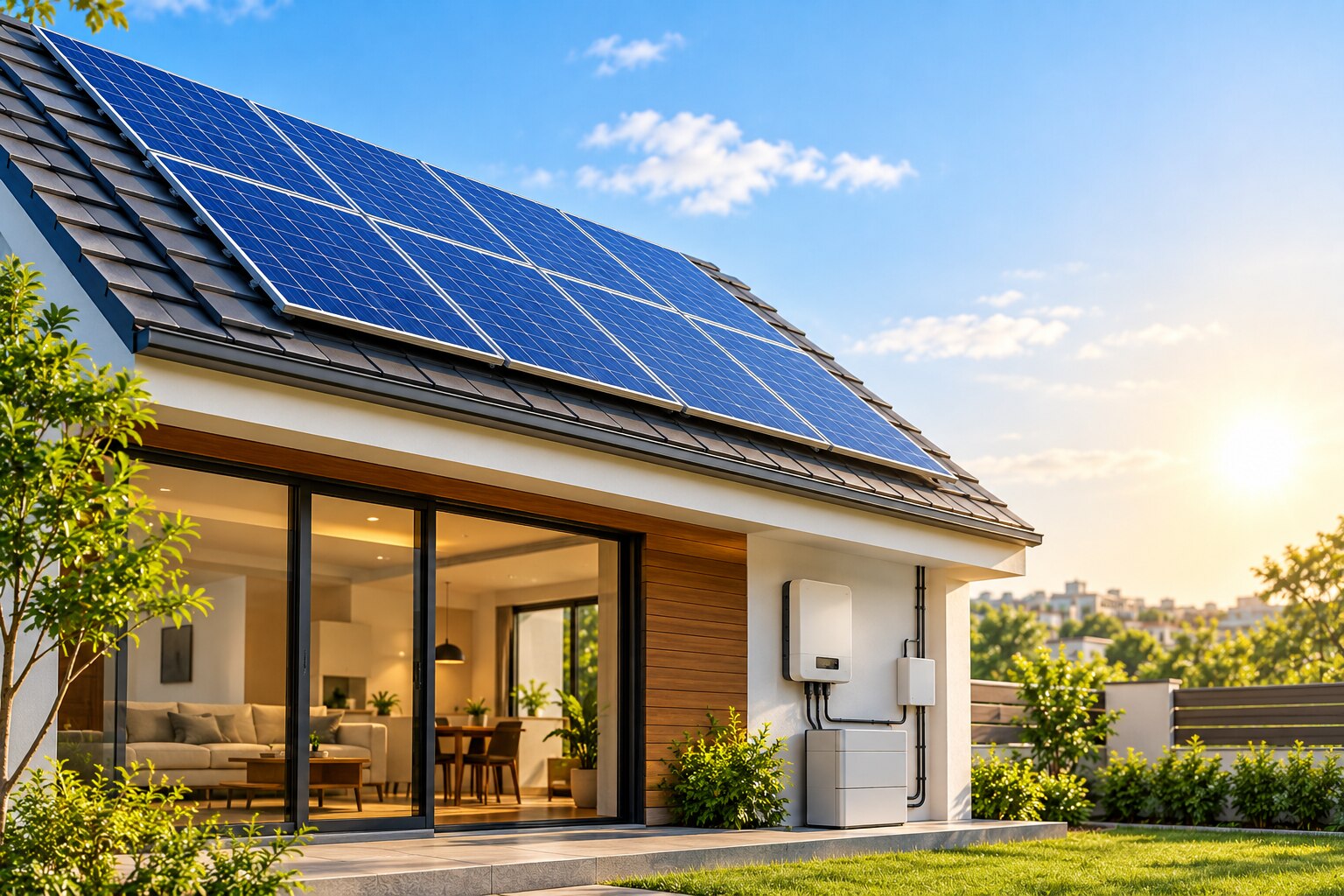
| Hybrid solar system with batteries | Supplies loads, charges the battery, and exports extra power when configured to do so | A backup-capable inverter isolates the building from the grid and supplies selected circuits |
| Off-grid solar system with batteries and backup generation | Charges batteries and runs loads from solar; the generator supports charging or heavy demand | It continues operating only while battery and generator capacity cover the loads |
On-grid equipment reduces purchased electricity but cannot power your home during a grid failure. Hybrid equipment provides outage protection only for circuits connected to the backup panel, such as lights, fans, refrigeration or communications equipment; large loads may remain disconnected.
An off-grid system has no utility supply to fall back on, so its battery, generator and load controls must cover evening demand, starting surges and extended cloudy periods.
How much of your electricity can solar actually replace?
Use the previous 12 months of bills to estimate replacement, not panel capacity alone. Record each month’s electricity consumption in kWh, sanctioned load, daytime electricity use, nighttime electricity use and seasonal peaks.
A simple solar capacity calculation compares expected annual solar generation with the kWh your system can serve directly, store or export under your utility’s rules.
Build a load inventory before choosing equipment. For every appliance, record its rated wattage, daily running hours, starting surge and daily energy use:
- Include air conditioners, water pumps, refrigerators, geysers, induction cooktops and lifts.
- Separate essential loads: lights, fans, refrigeration, communications equipment and selected pumps.
- Mark high-demand circuits, such as air conditioning, geysers, induction cooking and lifts, for separate control or backup decisions.
Solar directly offsets appliances operating while the panels produce power. Evening demand needs a grid export-credit arrangement or batteries; without either, those kWh still come from the grid. Compare daytime solar generation with daytime electricity use, then calculate how much stored energy can cover selected nighttime loads.
For an on-grid system, the replaceable share usually follows daytime demand and approved export credits. For a hybrid system, add battery-supplied evening and outage loads.
For an off-grid system, size panels and storage for essential loads during the least-sunny period, include starting surges and retain backup generation when prolonged clouds or large loads exceed the battery bank.
Which bill charges disappear, and which remain after solar installation?
Read the bill’s billing units first: 1 unit usually equals 1 kWh. For a reliable solar bill savings estimate, separate energy charges from fixed charges, demand charges on larger connections, and time-of-day charges that apply different rates to peak and off-peak hours.
| Charge | After solar installation | What to check |
|---|---|---|
| Energy charge | Falls as imported kWh falls | Retail rate per kWh |
| Fixed charges | Usually remain | Monthly connection or service fee |
| Demand charges | Can remain if your highest kW demand does not fall | Sanctioned load and recorded peak demand |
| Time-of-day charge | Changes only when solar reduces imports in billed periods | Peak, off-peak and solar-generation hours |
| Export credit | Surplus generation receives the utility’s approved credit | Net-metering or export tariff |
Reducing imported kWh does not automatically remove fixed charges or demand charges. Exported electricity may earn less than the retail price paid for imported power, so check your utility’s net-metering, export-limit, avoided-cost and time-of-use rules before estimating savings.
A site assessment must confirm:
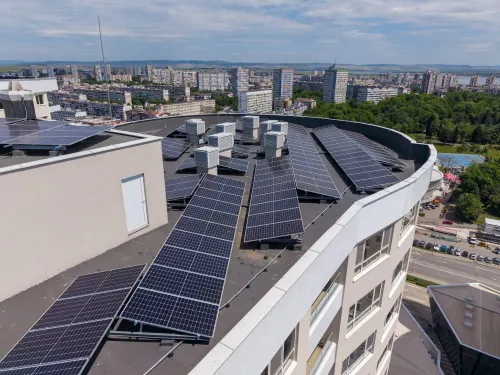
- Usable shadow-free roof area, orientation, tilt, structural condition and waterproofing
- Cable route, inverter location, ventilation and fire access
- Future obstructions, including new tanks, lifts or neighbouring construction
- Shadows from parapets, tanks and nearby buildings across morning, afternoon and different seasons
A shaded module can restrict current through a series-connected string, so output loss can exceed the visibly shaded area. Compare the bill calculation with measured roof conditions, not panel capacity alone.
How do batteries change solar independence and backup time?
A 10 kWh battery does not supply 10 kWh to your appliances. Estimate usable battery capacity as 10 × permitted depth of discharge × round-trip efficiency × inverter efficiency: 10 × 80% × 90% × 95% gives about 6.8 kWh. Compare that figure with your selected evening and outage loads, not your total connected load.
| Battery type | Strengths | Trade-offs |
|---|---|---|
| Lithium-ion | Higher usable depth of discharge, compact size, efficient charging | Higher upfront cost; requires temperature and battery-management controls |
| Lead-acid | Lower initial cost and established technology | Lower usable depth of discharge, heavier, ventilated installation, shorter replacement cycle |
Set charge and discharge limits within the manufacturer’s specification. High temperature accelerates battery ageing; lead-acid batteries require ventilation because charging can produce hydrogen. Plan for replacement before the battery reaches end of life, and check warranty limits for cycling and operating temperature.
- Short outages need enough storage for the critical-load panel: lights, fans, refrigeration, communications and selected pumps.
- Cloudy-day autonomy needs extra storage and array capacity for several low-sun days, not merely one evening.
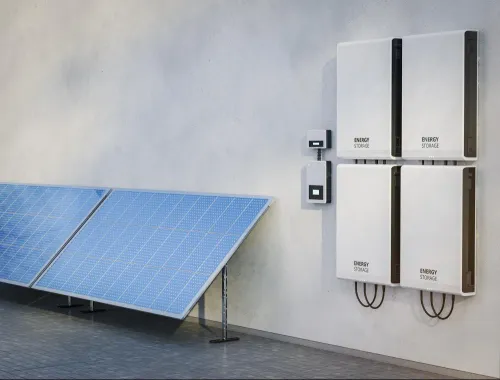
- A hybrid system needs a backup-capable inverter, battery isolation from the grid and a clearly labelled critical-load panel; a standard grid-tied inverter cannot provide backup power.
- For off-grid solar battery sizing, use the least-sunny period, include starting surges from pumps or compressors, and retain a generator when prolonged cloud, large loads or high surges exceed the battery bank.
Which solar approach fits your building and its real priorities?
Choose the operating model by your priority, not by the largest array that fits your roof.
| Option | Best fit | Main trade-off |
|---|---|---|
| On-grid | Reliable grid supply remains acceptable and you want fewer purchased kWh | Lowest storage requirement, but no backup when the grid fails |
| Hybrid | You want lower bills plus backup for selected circuits | Battery, backup-capable inverter and critical-load controls add cost and maintenance |
| Off-grid | The grid is absent, unreliable, or energy independence justifies larger batteries | Requires least-sunny-period sizing, load controls and often generator support |
Solar system selection must match the loads you actually need during an outage. An on-grid system reduces imported units but does not provide independence; a hybrid system can keep lights, fans, refrigeration, communications and selected pumps running; an off-grid system must cover those loads through cloudy periods.
Targeted systems can be better than powering the whole building. Solar water heating can offset much of domestic hot-water energy, but include freeze protection, overheat protection and backup heating. Solar lighting must be sized for nighttime runtime, cloudy-day reserve and battery temperature—not daytime panel wattage alone.
PV output changes with shading, orientation, temperature, gradual module degradation and equipment availability. Modules usually decline gradually; the inverter is a separate replacement consideration. Orange Sun Power Solutions can help a Nagpur customer compare these choices against bills, roof constraints, critical loads and outage expectations instead of treating a larger array as automatic energy independence.
Related products
 | System Intergration - On Grid We develop and commission on-grid MW scale solar power projects on turnkey basis. View product → |
 | System Intergration - Off Grid System Intergration - Off Grid We offer turnkey solutions to our customers. This entails feasibility studies, a design of demand specific systems, installation and maintenance of... View product → |
Frequently asked questions
What happens to solar power during a normal day and a grid outage?
During daylight, appliances use solar power first. Surplus electricity charges batteries or exports to the grid. During a grid outage, a grid-tied system normally shuts down unless it includes backup equipment and batteries.
How much of your electricity can solar actually replace?
Solar replacement depends on system size, roof space, sunlight, daytime demand, and battery capacity. Compare estimated annual generation with your consumption and identify how much electricity you use while the sun is available.
Which bill charges disappear, and which remain after solar installation?
Solar can reduce energy charges and export some surplus generation, subject to the utility tariff. Fixed charges, connection fees, taxes, minimum charges, and electricity used from the grid usually remain.
How do batteries change solar independence and backup time?
Batteries store surplus daytime solar for evening use and outages. Backup time depends on usable battery capacity, inverter limits, and the wattage of connected loads.
Which solar approach fits your building and its real priorities?
Choose on-grid solar for bill reduction, a hybrid system for bill reduction plus backup, or an off-grid system when reliable grid access is unavailable and storage can support all required loads.
Related products
 | Industrial Solar Rooftop An industrial solar rooftop project involves the installation of solar panels on the rooftops of industrial buildings or facilities to generate... View product → |
 | Commercial Solar Rooftop A commercial solar system involves the installation of solar panels on a commercial or business property to generate electricity. View product → |
 | Solar Panels We have wide range of solar panel. Solar Tie Grid System, Solar Street Light System, Solar Off Grid System, Solar Water Heater, Solar Pump. View product → |