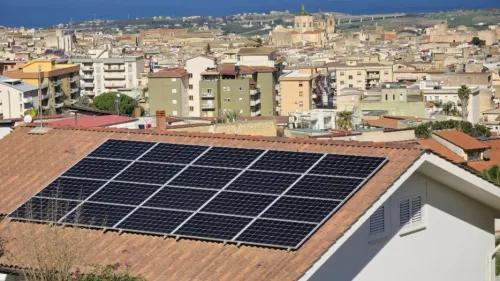



A Solar Home Loan or another eligible financing arrangement can help households spread the upfront cost of rooftop solar rather than paying the complete amount at once. For families considering solar in Maharashtra, financing should be evaluated alongside electricity savings, system lifespan, monthly cash flow, plus applicable lending terms.
The important question is not simply whether finance is available. Homeowners need to understand whether the repayment structure suits their budget.
Why Homeowners Consider Solar Financing
A rooftop solar project requires an upfront investment in modules, inverter equipment, mounting structures, electrical components, installation, plus associated work.
Financing may allow a homeowner to install an appropriately sized system while retaining savings for other household requirements.
Potential reasons for exploring finance include:
- Reducing immediate capital expenditure
- Spreading project costs across instalments
- Installing a suitable capacity instead of choosing an undersized system purely because of budget
- Managing household cash flow more predictably
Availability plus terms vary between lenders, so homeowners should confirm current conditions directly with the relevant financial institution.
Compare Repayment With Expected Savings
Solar panels generate electricity; the financial benefit depends on how much usable electricity the system produces plus how that generation affects grid consumption.
Suppose a household has a consistently high electricity requirement. A properly sized rooftop system may reduce the amount of electricity purchased from the grid.
However, savings should not be treated as guaranteed loan repayment income. Solar generation changes with weather, shading, system performance, consumption patterns, plus applicable electricity regulations.
A sensible financial calculation should include conservative generation estimates rather than optimistic assumptions.
Questions to Ask Before Choosing Finance
Before proceeding, check:
- What interest rate applies?
- Is the rate fixed or variable?
- What is the repayment tenure?
- Are processing charges applicable?
- Is collateral required?
- Can the loan be prepaid?
- What documents are needed?
- Does the selected solar installation meet the lender's conditions?
These details can significantly affect the real cost of financing.
Start With System Sizing
Financing should come after understanding the energy requirement.
A professional assessment can examine previous electricity bills, daytime usage, available rooftop space, shading, sanctioned electrical load, plus future requirements.
For example, a Nagpur household planning to add air conditioning or an electric vehicle later may have different future electricity needs from its current consumption.
Oversizing without analysis can unnecessarily increase investment. Undersizing may limit potential savings.
Consider the Total Ownership Cost
Monthly instalments are only one part of the calculation.
Homeowners should also consider equipment quality, warranties, inverter requirements, maintenance expectations, system monitoring, plus long-term service availability.
Orange Sun Power Solutions works with customers evaluating rooftop solar projects in Nagpur, helping them understand technical system requirements before they make financing decisions.
A Solar Home Loan can make rooftop solar more accessible when repayment terms, expected energy savings, plus household finances are evaluated together. Compare the complete financial commitment rather than choosing a loan based only on the lowest advertised instalment.